
The Edward Cameron Dimock, Jr. Prize in the Indian Humanities was awarded to Anna Seastrand for Body, History, and Myth: South Indian Murals, 1550-1800
The Joseph W. Elder Prize in the Indian Social Sciences was awarded to Divya Cherian for Merchants of Virtue: Hindus, Muslims, and Untouchables in Eighteenth-Century South Asia
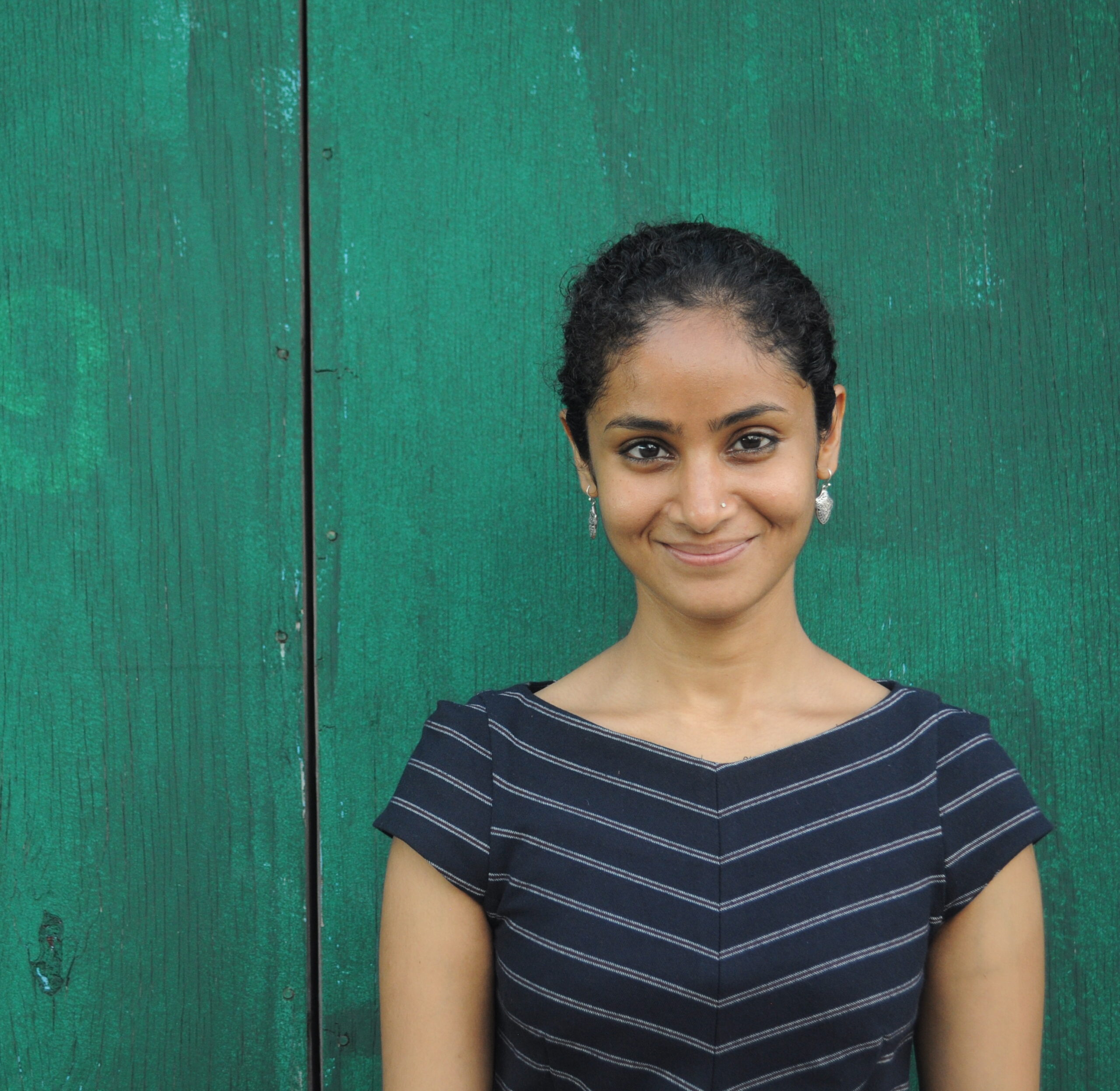
Divya Cherian
Merchants of Virtue, which will be published by the University of California Press in December 2022, is a fine-grained study of everyday life and local politics in the pre-colonial kingdom of Marwar—central and south-western Rajasthan today—in the eighteenth century. The book shows that early-modern merchants, known regionally as “mahajans,” remade the category “Hindu” in contrast to “Untouchable” in ways that also configured Muslims in caste terms. In the book, Divya Cherian argues that eighteenth-century merchants played a key role in using state authority and law to elevate their own caste practices such as Krishna-centric devotion, an adherence to non-violence and vegetarianism, and bodily austerity to being read as markers of high social rank. As beneficiaries of early-modern processes of state formation and global integration, Marwari merchants had by the eighteenth century scattered all over the Indian sub-continent and had acquired much wealth and power within Marwar and beyond. As they sought to reconfigure their social status, they made ritual, space, diet, and sex sites of active intervention. The merchants’ participation in and mobilization of the state caused the ethical codes of some to became normalized through law as virtuous for all. State-enforced bans on animal slaughter, gambling, and liquor swept through the kingdom. Vagrant, landless castes, castes associated with leather work and waste removal, and Muslims suffered the harshest consequences of this effort.
Lacking the land- and descent-based claims to elite status that rajputs could wield, merchants made an adherence to a ‘virtuous’ life the grounds upon which to claim inclusion among the region’s elite and to engineer the required change in the regional caste order. The elite identity that they remade with state help congealed around the term ‘Hindu.’ A key ingredient of this success, also connected to the growing dependence of kings upon moneylenders, was the Vaishnav affiliation of Maharaja Vijai Singh, the Rathor dynast who ruled Marwar through the bulk of the latter half of the eighteenth century. This pre-colonial Hindu identity that emerged in eighteenth-century Marwar was defined not in opposition to the Muslim as such, as it came to be in the colonial period, but rather against the figure of the Untouchable. In telling this history, Merchants of Virtue intervenes in four areas of historiographical debate: religious identity and conflict in pre-colonial South Asia, the history of caste and untouchability before colonialism, the relationship between ethics and politics, and the impact of the global birth of the capitalist order on local society and politics in South Asia. It places caste at the center of the history of early modernity in South Asia.
The AIIS Book Prize Committee praised Professor Cherian for the manuscript, saying the “well-crafted study of the Marwar kingdom of Rajasthan offers a compelling and refreshing analysis of state and society in precolonial South Asia. Especially rich and provocative is your finding that a new regime of power emerged from the construction of a distinctive Hindu identity in the late eighteenth century in which merchants played leading roles, their newfound position and status alongside ruling and landed high caste elites negotiated through their “pursuit of virtue” defined in terms of asceticism, vegetarianism, and non-injury. Such an identity, furthermore, was developed not only in relation to Muslims as the Other but also lower castes denominated as ‘Untouchables.’ Your careful and imaginative use of the Jodhpur Rathor administrative records also deserves high praise.”
Divya Cherian is. a historian of South Asia whose scholarship focuses on late pre-colonial and early colonial South Asia. She is an assistant professor at the Department of History at Princeton. She received her PhD in History from Columbia University in 2015 and prior to that, completed an MPhil and an MA in medieval and early modern South Asian history from Jawaharlal Nehru University. She held an AIIS junior fellowship in 2011-12. In addition to Merchants of Virtue, she has written about caste in early-modern Vaishnav bhakti temple communities and explored legal conceptions of sexual violence and personhood in pre-colonial, eighteenth-century South Asia. She is now working on her next research project, which is a history of magic, sexuality, and political life in pre-colonial and early colonial India.
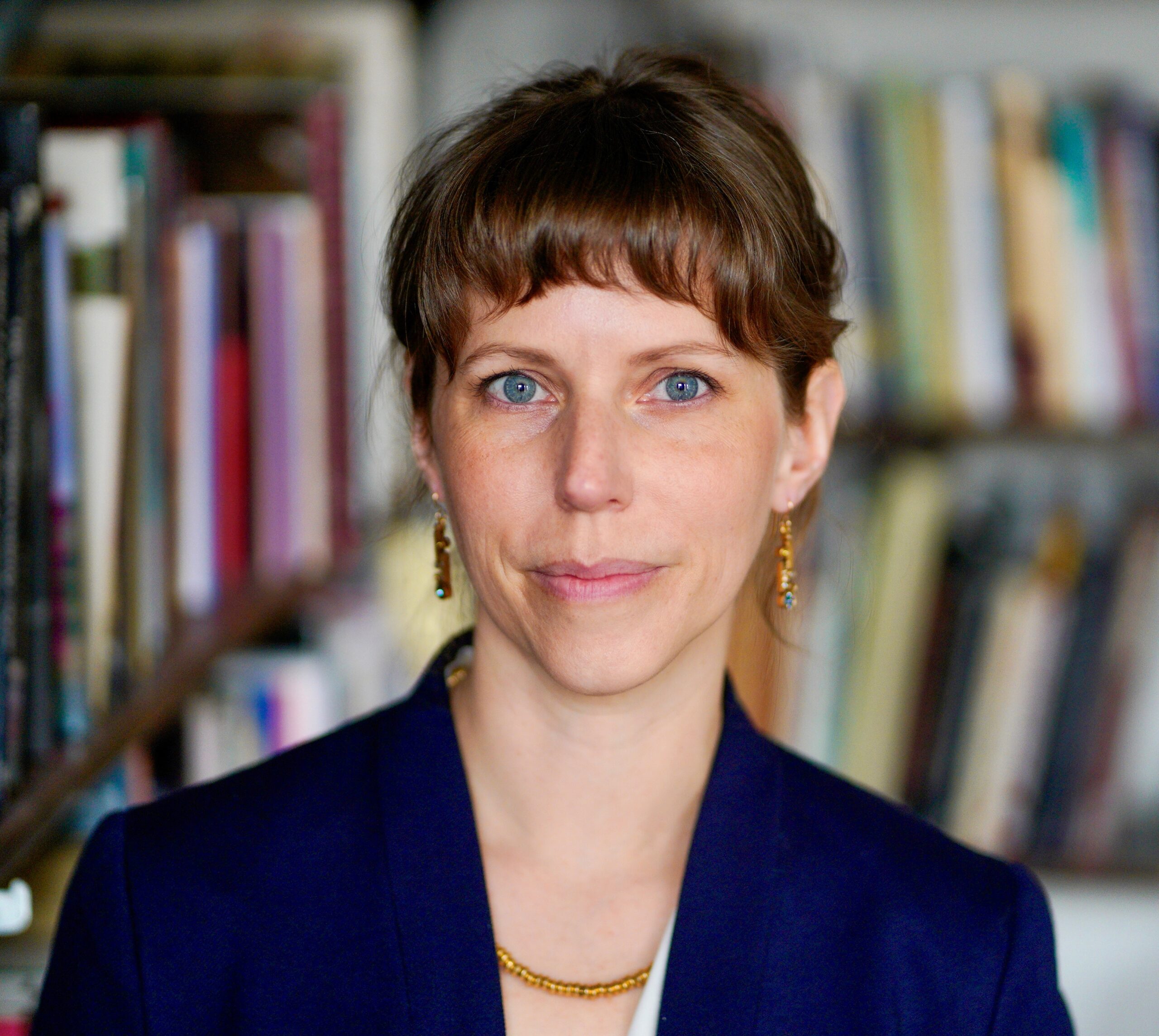
Anna Seastrand
As Anna Seastrand notes, walking through the halls that precede the sanctum of a south Indian temple can be an extraordinary sensory experience, as visitors find themselves surrounded by walls, and enclosed by a low ceiling, that carry a rich array of narrative paintings of sacred and often local import. Body, History, and Myth: South Indian Murals, 1550-1800 reconceives art and devotion in the south Indian temple through an intertextual reading of painting, architecture, and literary sources. It tells a story of intellectual, social, religious, and political transformations of early modern southeastern India that situates them in the broader history of South Asian art and within the transformations of the early modern world. Of distinctive significance in southern India in this period is the importance of textuality—evident in the power accrued by professional scribes, the prominence given to authorship and textual transmission in the religious literature of the period, as well as in representations of the written word within paintings. This book’s analysis of mural paintings, and their painted Tamil and Telugu-language inscriptions, offers new insights into the history of religions in terms of ritual developments, consolidation of sectarian institutions and identities, and the politics of patronage. The paintings illuminate the ways in which people negotiated ideas of the local within a translocal context, as demonstrated through various kinds of spatial mapping, place-based myths, supralocal economic and political networks, and polyglot cultures. The interpretations of the murals in situ conceptualize viewers as participants, resisting the valorization of a static beholder in favor of one who co-produces the mural in their somatic and imaginative experience of the visual images.
The AIIS Book Prize Committee, in notifying Professor Seastrand of her award, told her that it “recognizes the originality and importance of your study of Nayaka period temple mural paintings of the Tamil-speaking region of southeastern India. Your work offers a rich framework for understanding the reception, function, and multidimensional meanings of these paintings dating from the late sixteenth to the early eighteen century that ranged across multiple pictorial genres extending from portraiture to topography. Their subjects, themes, and attributes, as your manuscript imaginatively demonstrates, depict the world of kings as well as merchants and monastics and the ways in which different groups expressed and strengthened their various identities. Especially striking are your findings about the methods and processes whereby mural paintings invited and aroused viewers into devotional, somatic, and intellectual participation. We also appreciate your insistence on showing the extent to which painting and writing were thoroughly intertwined.”
Anna Lise Seastrand is an assistant professor in the Department of Art History at the University of Minnesota. She received her Ph.D. in Art History from Columbia University with distinction in 2013. She was a Harper-Schmidt Fellow in the Society of Fellows and Collegiate Assistant Professor at the University of Chicago, 2013-17, and a Visiting Scholar at the Neubauer Collegium for Culture and Society, 2017-2021. She is part of a number of collaborative and interdisciplinary projects, including the ongoing Interwoven: Sonic and Visual Histories of the Indian Ocean World and Temples of the Heart: Making a Home for Viṣṇu in Tirukkurungudi, which has been supported by the Davis Humanities Institute, the Indian Culture and Heritage Trust, and the American Academy of Religion. Her research has also been supported by the Center for Advanced Study in the Visual Arts, the French Institute of Pondicherry, and the American Institute of Indian Studies. A University of Wisconsin-Madison Year in India alum, she participated in the AIIS fall 2004 and summer 2006Tamil Language Program, as well as the AIIS summer 2010 Telugu Language Program. Her next book project, tentatively titled Trees and the Ecologies of Sacred Art in Southern India, will germinate at Dumbarton Oaks, where she will be a Fellow 2022-23.
The 2021-22 AIIS Book Prize Committee included Sarah Lamb and Anand Yang, co-chairs, Chanchal Dadlani, Diane P. Mines, Tulasi Srinivas, and Tariq Thachil